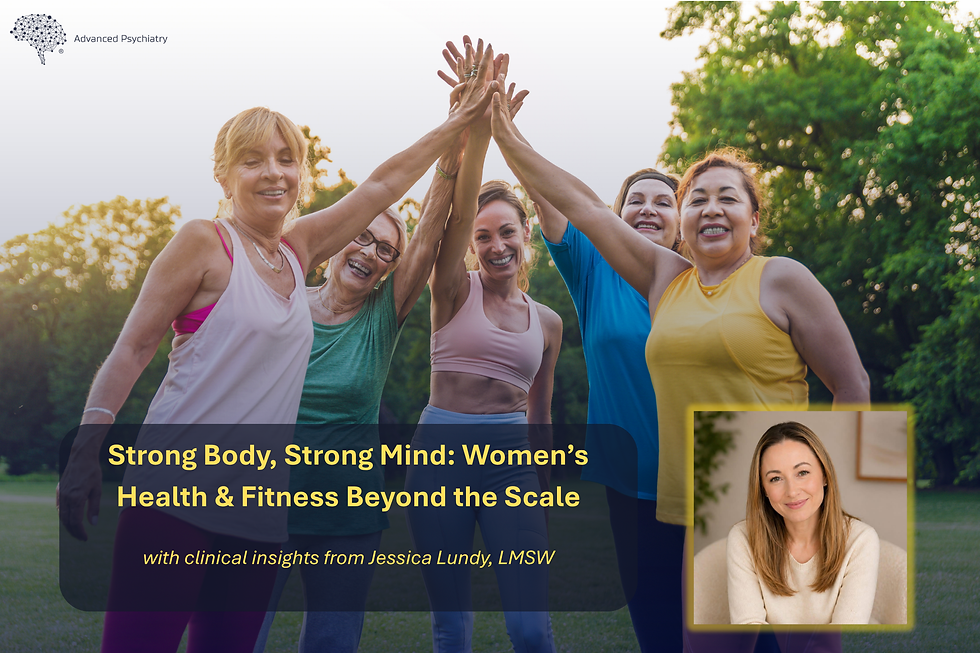
Strong Body, Strong Mind: Women’s Health & Fitness Beyond the Scale

With clinical insights from Jessica Lundy, LMSW, Therapist/Psychotherapist
Redefining “Health and Fitness”
Today is National Women’s Health & Fitness Day, an annual event that inspires women from coast to coast to get moving and get their exercise regime back on track. It’s also a day that tends to put the spotlight on physical achievements, from step counts and cardio goals to strength gains at the gym. For many women, though, the most meaningful spotlight has nothing to do with how their bodies look or perform, but how they feel.
Fitness and mental health are deeply connected, and that connection looks different at various stages of a woman’s life. To dig into what that relationship actually looks like – in motherhood, during high-stress career years, through hormonal shifts like perimenopause and menopause, and everywhere in between – we spoke with Jessica Lundy, LMSW, a therapist and psychotherapist at Advanced Psychiatry, about what she sees in her practice every day.
A Closer Look at the Mind-Body Connection
It’s well established that exercise supports a more positive mood, but the why behind this connection runs deeper than a post-workout endorphin boost. “From a clinical standpoint, some of the strongest evidence shows that consistent physical activity can reduce symptoms of anxiety and depression, improve mood, increase resilience to stress, and support better sleep,” Lundy says. “Exercise impacts mental health through several pathways, including regulating stress hormones, improving sleep quality, boosting self-confidence, and promoting brain health.”
At the same time, Lundy is careful to note that exercise isn’t a standalone solution for mental health concerns, and it isn’t only about intensity. “While movement can be incredibly beneficial, it is often most effective when combined with other supports such as therapy, medication when appropriate, strong social connections, and healthy lifestyle habits. Conversely, many people underestimate how much benefit they can gain from small amounts of movement. They often believe they need intense workouts to see results, when in reality, regular walks, stretching, yoga, or other moderate forms of activity can have a meaningful positive impact on mental well-being.”
In other words, fitness is mental health care. Not a replacement for other forms of support, but a genuine, evidence-backed piece of the picture.
How the Connection between Fitness & Mental Health Shifts Across Life Stages
The mental health benefits of movement don’t disappear or diminish as women move through different chapters of life, but the role it plays does change throughout the evolution of our lives. For example, Lundy explains, “During motherhood, physical activity can provide an important outlet for stress relief, emotional regulation, and maintaining a sense of identity outside of caregiving responsibilities. During demanding career years, movement can help manage chronic stress, improve focus, reduce anxiety, and protect against burnout. During perimenopause and menopause, exercise can be especially helpful in supporting mood stability, sleep quality, cognitive functioning, and overall quality of life while women navigate significant physical and hormonal changes. This is also a stage of life when many women benefit from incorporating more strength training into their routines.”
The reasons for this shift come down to our bodies’ physical and mental needs alike, from maintaining muscle mass, bone density, balance, and functional strength for long-term health and independence to strength training for boosting confidence, resilience, and overall well-being. “Across all stages, I encourage women to give themselves permission to adapt their routines as their circumstances evolve,” Lundy adds. “The goal is not to exercise the same way forever, but to find forms of movement that continue to support both physical and emotional well-being.”
Common Mental Health Barriers to Staying Active
Knowing that exercise helps with mental health doesn’t always make it easier to actually move. Stress, body image, perfectionism, and simple overwhelm can all get in the way. For others, the barrier isn’t motivation at all, but bandwidth.
Many women, Lundy says, “struggle with the belief that exercise only ‘counts’ if it’s intense, lengthy, or produces visible physical results. Many women are also juggling multiple responsibilities, including careers, caregiving, parenting, household management, and supporting others, which often leads them to place their own needs at the bottom of the priority list.”
In short – when time and energy are both limited, self-care is typically the first thing women sacrifice. How, then, can women overcome these barriers for greater physical and mental health?
What Actually Helps Women's Health & Fitness: A Mental-Health-First Approach to Fitness
The good news is that overcoming these obstacles rarely requires a complete overhaul, and it usually starts with a shift in mindset. Lundy points to consistency over intensity, and self-compassion over self-criticism, as the real drivers of a sustainable relationship with movement:
“When working with clients, I often encourage them to move away from an all-or-nothing mindset. Even a brief 10-minute walk provides benefits, and small steps are often more sustainable than ambitious goals. It can also help to focus on how movement improves mood, energy, and stress levels rather than focusing on appearance.”
Choosing activities that feel enjoyable and realistic is vital, she goes on to explain, because it’s important that the movement doesn’t feel like a punishment or obligation. After all, the more you enjoy an activity, the more likely you are to continue it, and in turn develop a healthier relationship with exercise.
This same mindset shift applies to how you define success in the first place. Lundy often starts by asking clients a deceptively simple question: is your motivation coming from self-care, or from self-criticism?
And there’s a reason for this. “Many people have spent years viewing exercise primarily as a way to change their body, so part of the process involves broadening their definition of success. Instead of evaluating a workout based on calories burned or changes on a scale, I encourage people to pay attention to how they feel afterward. Are they sleeping better, feeling calmer, thinking more clearly, or managing stress more effectively? Focusing on these internal benefits creates a more sustainable relationship with movement because the rewards are often immediate and personally meaningful.”
Reaping the rewards of movement goes beyond improving our relationship with exercise. It also strengthens the relationship we have with our own bodies – bodies that, Lundy reminds us, “allow us to care for loved ones, pursue our goals, experience life’s meaningful moments, and move through the world. Shifting the focus from how our body looks to what it does for us can foster greater self-compassion and appreciation.”
By taking this mental-health-first approach to fitness, exercise becomes an act of caring for the body rather than trying to fix it, resulting in less guilt, greater consistency, and improved overall well-being.
A More Honest Definition of “Healthy”
This National Women’s Health & Fitness Day, consider measuring “healthy” by a different standard, not by how a workout looks but by how it makes you feel – looking at movement as a form of self-compassion rather than self-punishment. “I wish more women understood that movement does not have to be perfect, intense, or focused on changing their appearance to positively affect their mental health. The most beneficial exercise routine is often the one that feels sustainable and supportive, not necessarily the most challenging.”
Lundy continues, “As we age, our bodies have different needs, and staying active, particularly through strength training and functional movement, becomes an investment in our future health, mobility, and quality of life. When women begin to view physical activity as a way to care for both their minds and their bodies, they are often more likely to build lasting habits and experience greater emotional wellbeing. Small, consistent acts of movement can create meaningful improvements in mood, stress management, self-confidence, and overall quality of life.”
When to Seek Support for Mental Health
Everyone goes through stretches where they just don’t feel like moving. Busy schedules, increased stress, major life changes, and other obstacles can all cause a temporary slump, but it’s worth knowing the difference between a normal dip in motivation and a sign that something more is going on. Clinical concerns are more persistent and may include:
Depression – prolonged low mood, fatigue, loss of interest in activities that were once enjoyable, feelings of hopelessness, changes in sleep or appetite, and difficulty concentrating.
Anxiety – excessive worry, racing thoughts, avoidance behaviors, restlessness, or physical tension that interferes with daily functioning.
“One distinction I often look for is whether the person still wants to engage in activities but is struggling to get started, or whether the desire itself has significantly diminished. If symptoms persist for several weeks or begin affecting work, relationships, or daily responsibilities, it may be time to seek professional support.”
If that sounds familiar, Lundy advises, it’s worth reaching out to a therapist or doctor, because fitness and mental health care aren’t separate tracks. They work best together.
Lundy leaves us with this:
“I often remind women that we can’t pour from an empty cup. Taking care of our own physical and mental health isn’t selfish; it’s essential. This becomes even more important as we age and our bodies naturally change and require different forms of care, recovery, and support. Prioritizing movement and overall wellness helps us maintain our health, resilience, and quality of life so we can continue showing up for the people and responsibilities that matter most to us.”
-----
Advanced Psychiatry
Book an Appointment: https://www.advancedpsych.com/contact-us
Ann Arbor: (734) 436-4886
Lansing: (517) 325-3776
Troy: (248) 885-8887
Novi: (248) 885-8887
Fort Wayne: (260)-888-1378